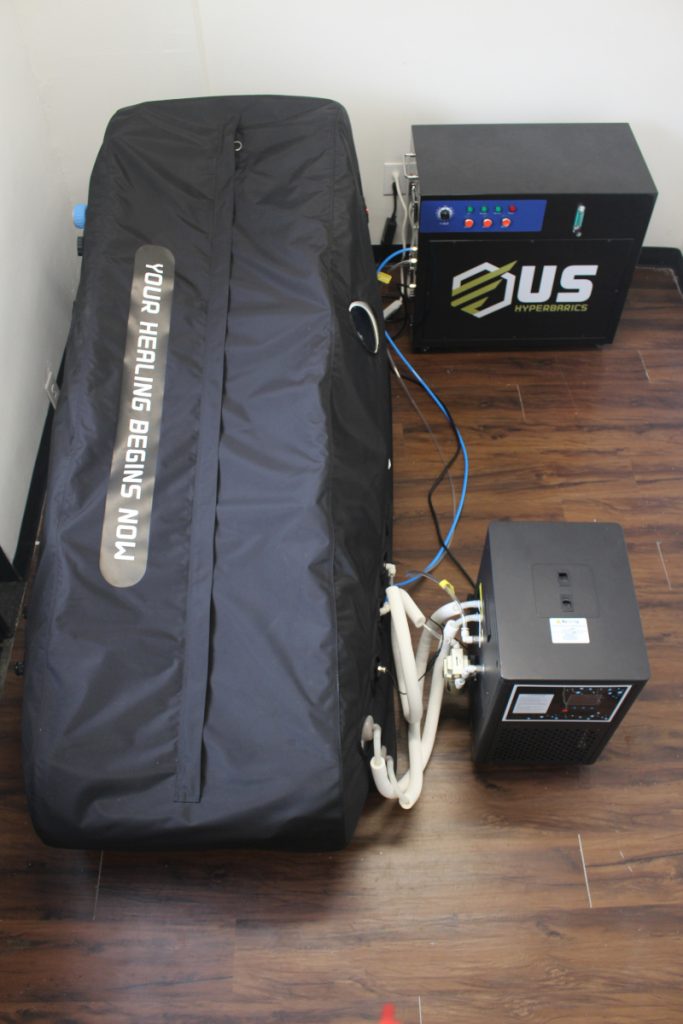
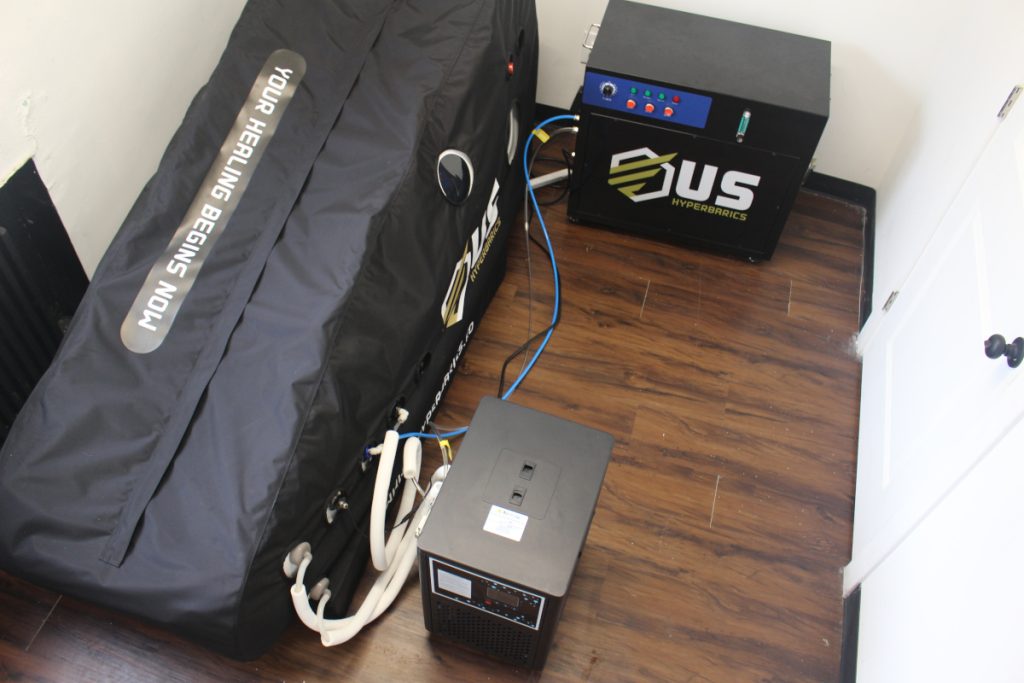
Hyperbaric Room
Hyperbaric Oxygen Therapy (Hyperbaric Chamber)
How It Works
Hyperbaric Oxygen Therapy (HBOT) involves breathing 100% oxygen in a pressurized chamber, typically at 1.5–3 times normal atmospheric pressure. The pressure allows oxygen to dissolve into plasma and better penetrate tissues — much more than when breathing regular air.
Why It’s Beneficial (Evidence-Backed)
- Enhanced Healing & Tissue Repair: Increased oxygen delivery promotes the growth of new blood vessels and connective tissue, which can accelerate wound healing and repair damaged tissues.
- Reduced Inflammation & Swelling: Higher tissue oxygen levels can dampen inflammatory processes and support recovery from injury.
- Immune System Support: Boosts immune response by enabling white blood cells to work more effectively.
- Approved Medical Uses: HBOT is FDA-approved for treating decompression sickness, non-healing wounds (e.g., diabetic foot ulcers), carbon monoxide poisoning, radiation injury, and more.
- Research also suggests potential benefits in reducing oxidative stress and improving cellular oxygenation in chronic conditions, though evidence is still emerging.
Best Time to Use
- As prescribed by a professional: HBOT protocols vary by goal; medical uses often involve multiple sessions over weeks.
- For recovery or performance goals: Some wellness programs recommend routine use (e.g., 2–5 sessions/week), but these are less established than clinical protocols.
- Not a casual daily treatment: Because HBOT is a medical therapy, timing should follow a healthcare provider’s guidance, especially for safety and effectiveness.
Safety/Contraindications
- People with lung issues (e.g., COPD), untreated pneumothorax, or some ear/sinus conditions should avoid HBOT without medical supervision.
- Supervision is key — the chamber is pressurized, and pure oxygen environments require careful monitoring.
***THIS MUST BE USED WITH A TRAINED STAFF MEMBER PRESENT***